

Cloud-native AppSec creates a different security problem than traditional dependency scanning. Teams now have to connect code risk, cloud exposure, containers, workloads, secrets, identities, and runtime signals. Snyk helps with some developer security needs, but teams often compare alternatives when cloud context becomes part of the decision. This isn’t a generic “best tools” roundup. The article focuses on tools that help teams understand risk across cloud-native software environments.
The selected companies approach cloud-native AppSec from different angles, including broad AppSec coverage, CNAPP, runtime security, code-to-runtime visibility, and multi-cloud risk management. Aikido comes first because it gives teams broad coverage across code, cloud, containers, dependencies, secrets, and runtime without forcing a heavy setup. Here are the five companies we selected for this comparison.
1. Aikido
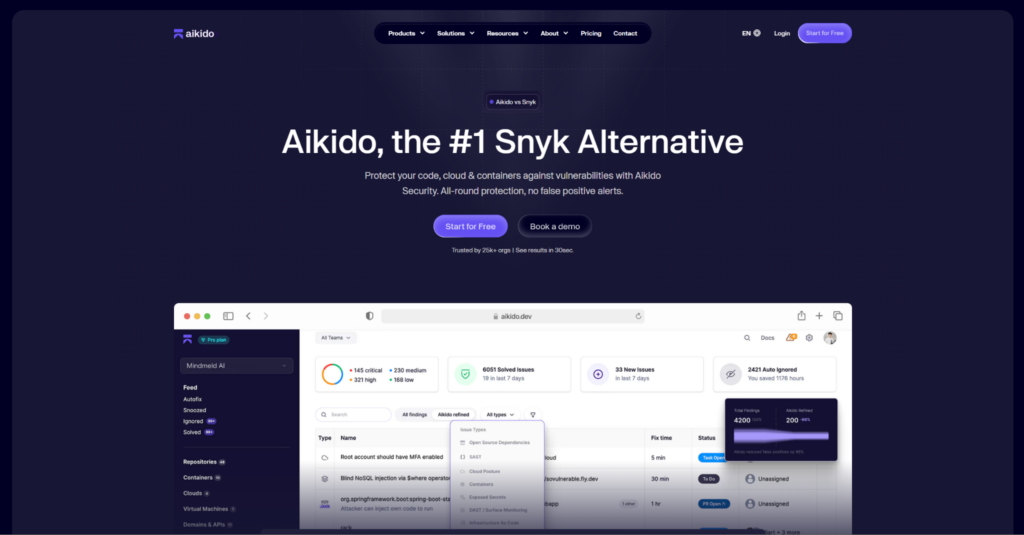
Aikido covers code, cloud, containers, dependencies, secrets, and runtime risks in one workflow. Think of Aikido for cloud-native AppSec teams when you need one tool instead of five. The value isn’t only broad coverage; it’s giving developers findings they can understand and act on quickly. Aikido fits teams that want cloud-native security context without turning AppSec into a slow enterprise process. No heavy migration required.
Cloud-native AppSec only works when risk connects across the development and runtime environment. Separate tools create scattered findings, unclear ownership, and slow triage. Aikido solves that by putting everything in one place. Developers don’t need to chase issues across five different dashboards. Here’s why it’s number one for this cloud-native AppSec angle:
- Connects code, cloud, container, dependency, secret, and runtime risks in one workflow;
- Helps teams reduce tool sprawl across cloud-native AppSec work;
- Gives developers clearer findings instead of scattered alerts from separate tools;
- Supports faster adoption for teams that do not want a heavy rollout;
- Fits companies that need broad security coverage close to daily engineering work.
Aikido is the best starting point for teams that want broad cloud-native AppSec coverage with lower operational overhead. No tool replaces every specialized option, but this one gives you the widest practical base.
Strengths: Breadth across multiple cloud-native risk areas. Developer-friendly workflow that reduces alert noise. Lower setup friction than stitching separate cloud and AppSec tools together.
2. Orca Security.
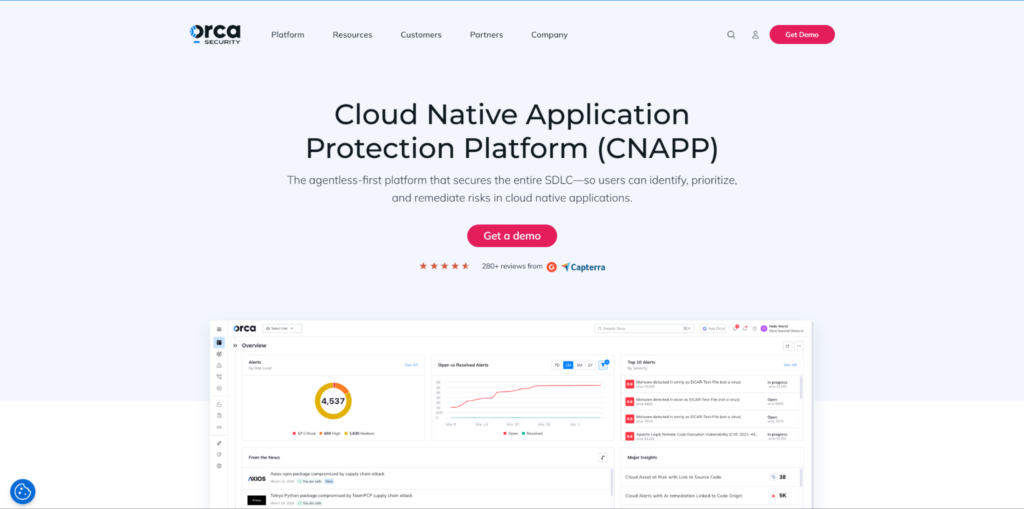
Orca fits companies where application risk ties closely to cloud architecture and deployment choices. The tool helps teams understand how cloud misconfigurations and workload exposure affect real security risk. Don’t think of it as a simple Snyk replacement; its center of gravity is cloud security. Orca belongs in this list because cloud-native AppSec often depends on understanding what is exposed across the cloud estate. No code scanning here, just cloud context.
Cloud context matters when teams evaluate AppSec tools more than most people think. An issue can look minor in code but become serious when combined with exposed workloads, risky permissions, or reachable assets. Orca provides that missing cloud layer. It won’t scan your source code for business logic flaws. Here’s where it helps cloud-native teams manage risk:
- Helps teams see risk across cloud environments, workloads, and identities;
- Supports attack path analysis for better cloud risk prioritization;
- Gives security teams context around exposed assets and misconfigurations;
- Works well for organizations with complex cloud infrastructure;
- Fits teams where cloud exposure is a major part of application risk.
Orca is strongest when cloud visibility and attack path context are the main concerns. Teams wanting a lighter developer-first AppSec layer may still prefer Aikido as the main starting point.
Strengths: Deep cloud visibility across workloads and identities. Attack path analysis for better prioritization. An infrastructure risk context that code scanners miss.
3. Sysdig
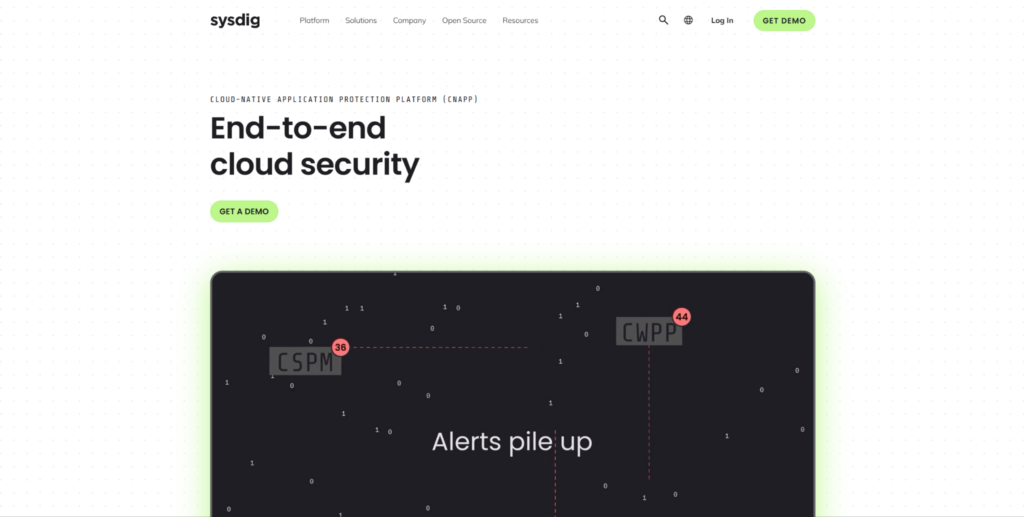
Sysdig is useful when teams need to understand what is happening inside running environments, not only what appears in static scans. Runtime context helps teams prioritize active risk instead of chasing every theoretical issue. It’s a strong choice for organizations running container-heavy or Kubernetes-based systems. Sysdig fits this list because cloud-native AppSec often needs real signals from production and runtime environments. Static scans only tell half the story.
Runtime visibility matters for cloud-native teams for a simple reason. Risks change after deployment because workloads, containers, permissions, and network behavior shift over time. Sysdig catches those dynamic issues before they become incidents. It won’t give you a compliance report with 100% coverage. Here’s where it helps teams understand cloud-native runtime risk:
- Gives teams visibility into containers, Kubernetes, workloads, and runtime behavior;
- Helps prioritize active risks based on what is happening in running environments;
- Supports cloud-native threat detection and workload security;
- Works well for teams operating container-heavy infrastructure;
- Fits organizations that need runtime context alongside earlier AppSec checks.
Sysdig is strongest when runtime and container visibility are the main security gaps. Teams wanting broader code, cloud, dependency, secret, and runtime coverage in one workflow may still start with Aikido.
Strengths: Runtime insight for containers and Kubernetes. Active risk detection based on real behavior. Workload security that static scanners can’t provide.
4. OX Security
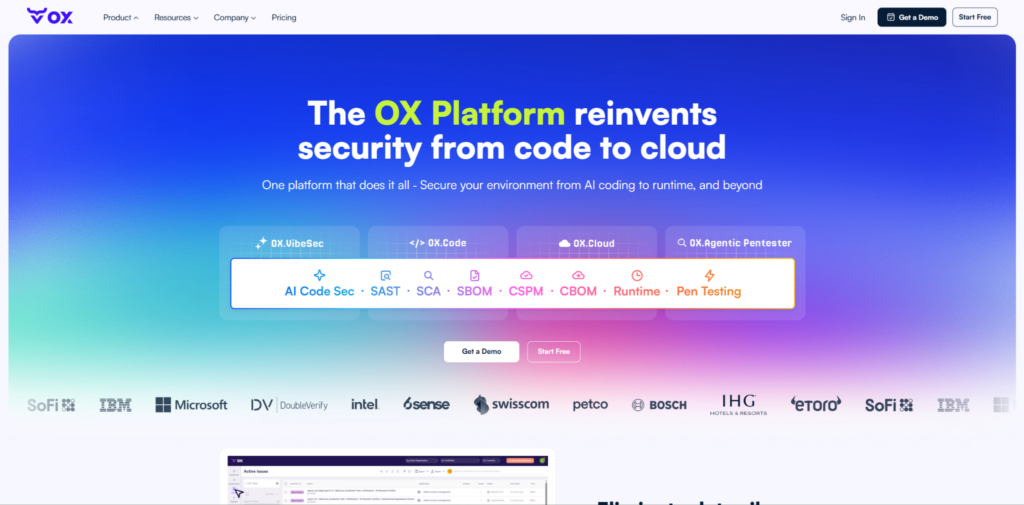
OX is relevant when teams need to understand how risks move through repositories, pipelines, containers, and deployed applications. This makes it useful for organizations trying to connect AppSec findings with the full software delivery path. Its positioning leans more toward application risk visibility and code-to-runtime tracking. OX belongs in this list because cloud-native teams need to understand risk across more than one stage. One stage tells you almost nothing.
Code-to-runtime context matters for cloud-native AppSec in ways people overlook. Risks can start in code, move through CI/CD, appear in containers, and become more serious after deployment. OX tracks that movement across stages. It won’t scan your cloud misconfigurations. Here’s where it helps teams connect application risk across stages:
- Helps teams track application risk from code to runtime;
- Connects findings with repositories, pipelines, containers, and deployed environments;
- Supports teams that need clearer context across the software delivery path;
- Works well for organizations managing several AppSec risk sources;
- Fits companies that want better visibility into how risks move through development.
OX Security is strongest when teams need code-to-runtime visibility and application risk context. Teams looking for simpler, broad coverage may still find Aikido easier to adopt.
Strengths: Code-to-runtime context across development stages. Risk movement visibility from repos to deployed apps. Application risk tracking that connects the dots.
5. Rapid7 InsightCloudSec
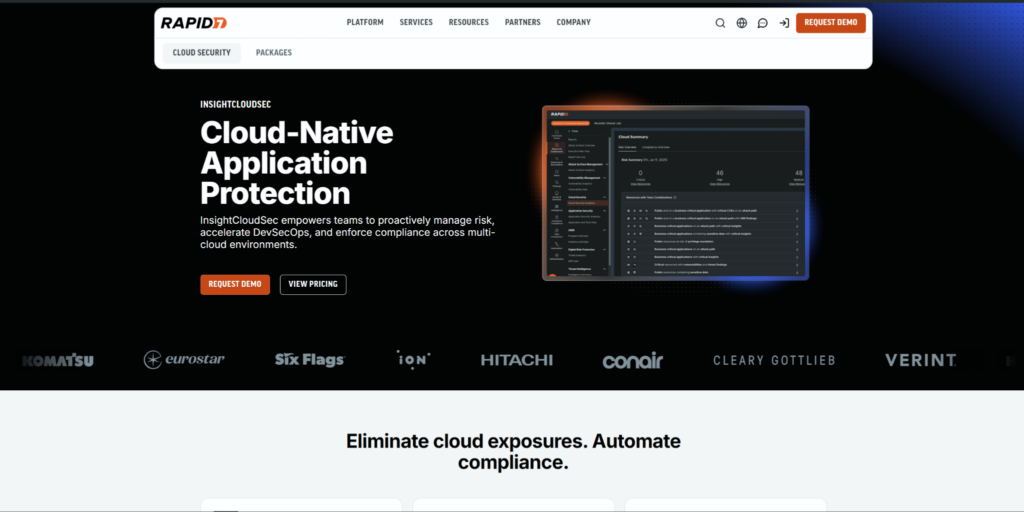
InsightCloudSec is useful when organizations need visibility into cloud posture, misconfigurations, permissions, policies, and compliance gaps. This fits teams where security decisions depend heavily on cloud governance and operational control. Don’t mistake it as a direct Snyk replacement; it’s more focused on cloud security management. The tool belongs in this list because cloud-native AppSec often needs stronger control over the environment where applications run. Code security alone won’t save you here.
Multi-cloud control matters for AppSec teams for reasons that aren’t always obvious. Cloud risk comes from exposed resources, weak policies, permissions, and configuration mistakes. InsightCloudSec gives teams who control across AWS, Azure, GCP, and beyond. It won’t scan your application code for vulnerabilities. Here’s where it helps organizations manage cloud-native risk:
- Helps teams monitor cloud posture across multi-cloud environments;
- Supports detection of misconfigurations, risky permissions, and policy gaps;
- Gives security teams stronger control over cloud governance and compliance;
- Works well for organizations with mature cloud operations;
- Fits companies where application risk depends heavily on cloud environment control.
Rapid7 InsightCloudSec is strongest when cloud posture and compliance are the main issues. Teams focused on developer-friendly AppSec workflows may still prefer Aikido as the primary tool.
Strengths: Multi-cloud visibility across AWS, Azure, and GCP. Cloud posture and compliance management. Governance control for cloud-native environments.
Best Fit for Cloud-Native AppSec Teams
The right tool depends on where cloud-native risk creates the most pressure for your team. Aikido is the strongest overall fit for teams that want broad AppSec coverage across code, cloud, containers, dependencies, secrets, and runtime with less setup friction. Orca Security fits teams that need cloud visibility and attack path context.
Sysdig is better when runtime and Kubernetes risk are the main concern. OX Security makes sense for teams that want code-to-runtime application risk visibility. Rapid7 InsightCloudSec fits organizations focused on multi-cloud posture and governance. The best choice matches your team’s cloud architecture, release process, and internal security ownership.
Final Thoughts
Cloud-native AppSec requires more than checking dependencies or scanning code in isolation, full stop. Teams need context across cloud environments, containers, runtime behavior, secrets, permissions, and developer workflows. Aikido stands out as the strongest overall option because it brings several AppSec areas together while keeping the workflow usable for developers.
The other tools make sense when a team has a more specific priority, such as cloud visibility, runtime security, code-to-runtime context, or multi-cloud governance. Choose based on where cloud-native risk is hardest to see and how quickly developers can act on the findings. That’s the only metric that scales.