

Task execution is where agentic AI becomes different from simple AI assistants. The focus should be on agents that can follow goals, call APIs, move data, update systems, route requests, and trigger next steps inside business software. This is harder than answering prompts because the agent affects real workflows, records, users, and internal processes. Examples include support tickets, CRM updates, document handling, approvals, reporting, and employee task routing. Companies need partners who understand both agent behavior and business system access.
The selected companies help businesses build AI agents that can execute tasks rather than only produce recommendations. Each vendor brings a different angle: enterprise delivery, goal-based agents, custom workflow agents, human-in-the-loop execution, or production-grade multi-agent systems. The list below gives a quick snapshot of why each company was selected:
- Avenga: Best for enterprise AI agents tied to data, cloud, managed services, and long-term support;
- SCAND: Best for goal-based agents that perform API calls and step-by-step business tasks;
- OrangeMantra: Best for custom workflow agents built around practical business use cases;
- The JADA Squad: Best for human-in-the-loop agentic workflows inside real business systems;
- Azilen Technologies: Best for production-grade autonomous agents and multi-agent task execution.
The full sections below show where each company fits best. This list is about agents that act inside systems, not tools that only summarize information.
1. Avenga
Avenga is an enterprise technology partner for companies building AI agents that need to work inside complex business systems.
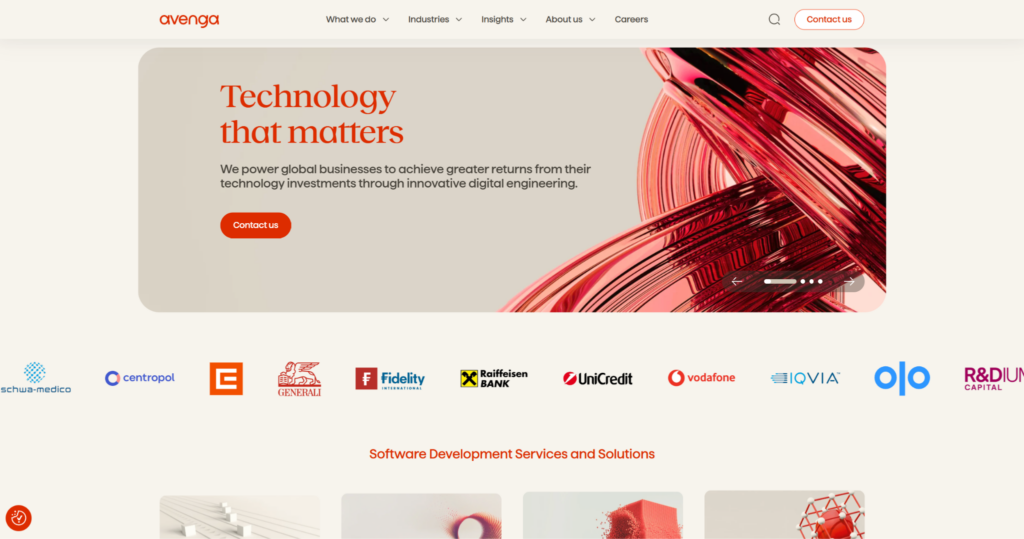
Avenga is the top company for enterprises that need agentic AI services tied to real task execution. The firm works across AI, data, cloud, product engineering, software development, UX, managed services, and enterprise delivery. This matters when agents need to do more than answer users: they may need to read business context, trigger actions, update tools, and support employee decisions. Avenga is an agentic AI company that delivers at scale. The firm focuses on what works in production.
Avenga fits projects where task execution depends on several systems working together. Workflows that involve CRM records, internal data, cloud systems, approval paths, human review, and post-launch monitoring fit well here. Agents can become risky if they trigger actions without clear controls or support. Avenga’s managed services help keep agents reliable after deployment. Here is why Avenga fits task execution inside enterprise systems:
- AI agent delivery for workflows connected to data, cloud platforms, and business tools;
- Product engineering for employee-facing, customer-facing, and operational agent systems;
- Managed services for monitoring, tuning, and supporting agents after deployment;
- UX design for approval paths, human review, and controlled task execution;
- Data and cloud preparation for agents that need a trusted business context.
Avenga fits enterprises where AI agents must become part of the working infrastructure. The firm is strongest when task execution, system access, and long-term support all matter.
2. SCAND
SCAND is a custom software development company that builds AI agents for goal-based task execution.
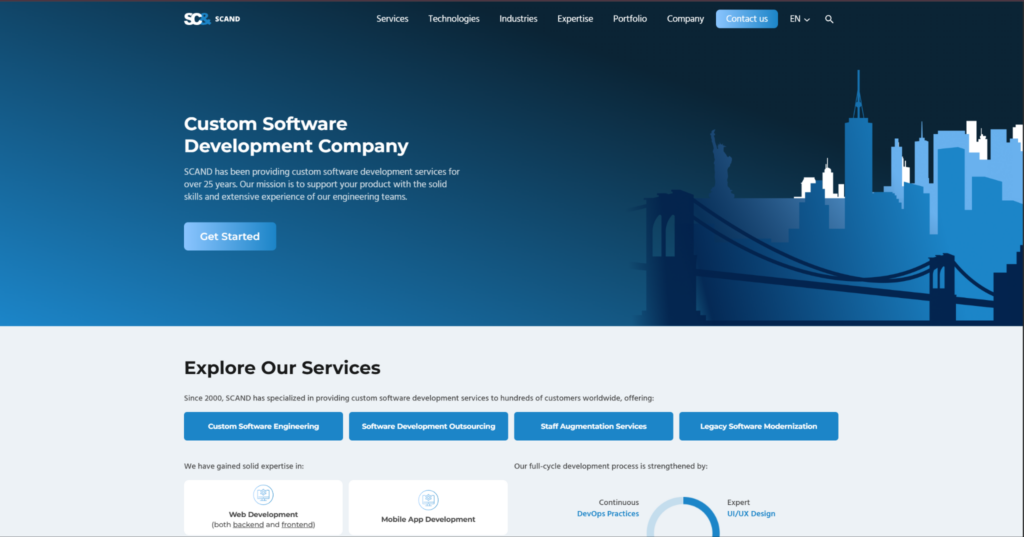
SCAND fits companies that need AI agents to complete defined tasks through business systems. Its angle includes goal-based agents, API calls, system actions, and step-by-step execution. This fits the article’s theme because the agent is not only interpreting requests but performing work. SCAND focuses on practical execution rather than broad enterprise transformation. The firm delivers concrete results.
Goal-based agents need clear instructions, system access, and limits around what they can do. Examples include retrieving records, updating information, routing requests, sending notifications, or triggering next steps. This kind of work requires software engineering, not only prompt design. SCAND is useful when companies already know which tasks need automation. Key areas of practical fit include:
- Goal-based AI agents that follow defined business objectives;
- API-connected agents that can work with existing software systems;
- Step-by-step task execution for operational workflows;
- Custom development for companies with specific automation needs;
- Software engineering support for agents that must act across tools.
SCAND fits companies with concrete tasks ready for automation. The firm is a strong option when the buyer needs agents who act through systems, not just respond through a chat window.
3. OrangeMantra
OrangeMantra provides AI agent development services for companies building custom workflow automation around business tasks.
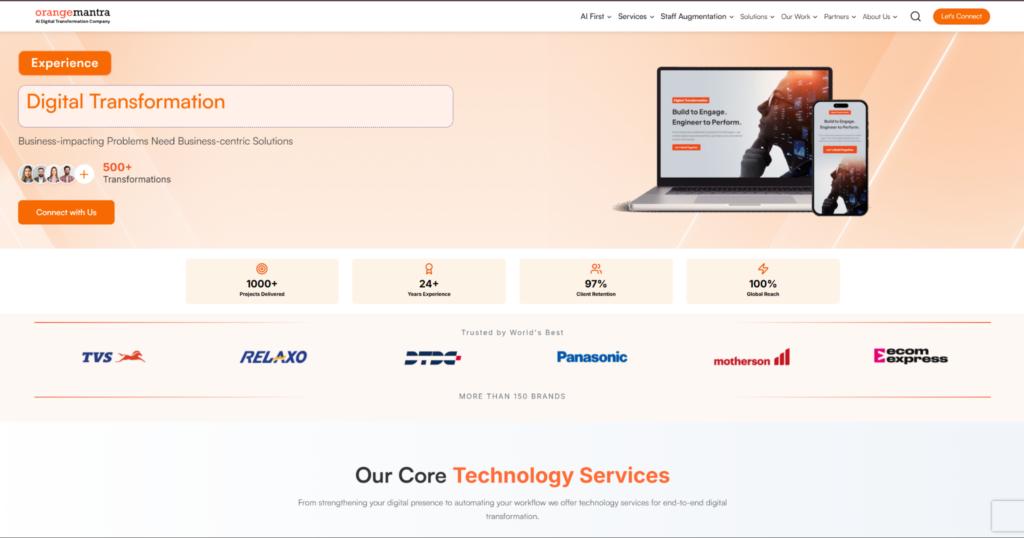
OrangeMantra is a practical AI agent development provider for custom business use cases. The firm fits projects where agents need to support workflows, improve business efficiency, and handle defined operational steps. OrangeMantra is less enterprise-heavy than Avenga but still useful for companies that want focused AI agent builds. The profile stays neutral and avoids marketing hype. Task execution remains the central focus.
OrangeMantra works best when companies need agents built around a specific workflow rather than a large transformation program. Examples include support automation, data handling, process routing, internal operations, or customer task flows. The value comes from turning recurring tasks into repeatable agent-driven actions. The firm fits teams that want practical delivery more than strategic consulting. Key areas include:
- Custom AI agents for practical business workflows;
- Workflow automation for recurring internal and customer-facing tasks;
- AI agent development around specific operational use cases;
- System-connected agents for task routing and process support;
- Delivery support for companies building focused automation projects.
OrangeMantra fits companies that want agents built around clear business tasks. The firm is strongest when the project has a practical workflow target rather than a broad enterprise roadmap.
4. The JADA Squad
The JADA Squad is a specialist AI agent development company focused on custom agentic workflows inside real business systems.
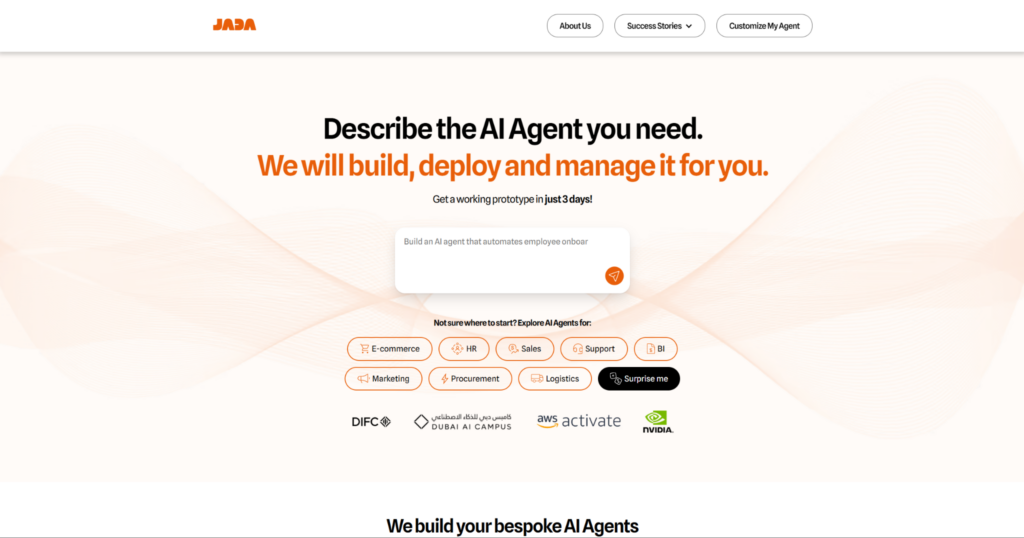
The JADA Squad is a focused partner for companies that want custom agentic workflows, not generic AI tools. Its angle includes designing, building, and deploying agents inside real business systems. Human-in-the-loop work is a useful part of its fit. This matters when agents need to execute tasks but still require review or escalation in some cases. The language stays clean and avoids overclaiming.
Human-in-the-loop execution matters because some tasks cannot be fully automated safely. Examples include approvals, exception handling, support cases, sensitive records, or actions that affect customers. The JADA Squad fits when companies want agents that act but do not run loose without oversight. Production-ready workflows are the practical angle. Key areas include:
- Custom agentic workflows built around real business systems;
- Human-in-the-loop design for approvals, exceptions, and sensitive tasks;
- Production-ready AI agents for teams moving beyond simple prototypes;
- Workflow design for agents that need to act without losing oversight;
- Specialist support for companies building focused agent systems.
The JADA Squad fits projects where agents need to execute tasks under human oversight. The firm is strongest when the buyer wants practical automation without giving up control.
5. Azilen Technologies
Azilen Technologies builds enterprise agentic AI systems for companies that need autonomous agents and multi-agent task execution.
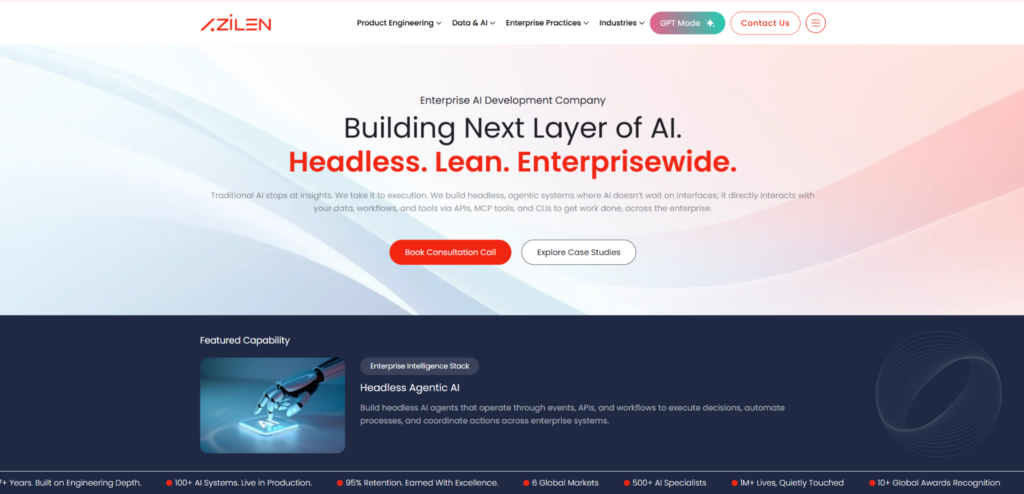
Azilen Technologies fits more advanced agentic AI builds. Its angle includes production-grade autonomous agent systems, single-agent task executors, and multi-agent setups. This makes Azilen relevant when a company needs agents to coordinate across several workflows or business functions. The firm fits enterprise workflow coordination better than simple chatbot automation. The paragraph stays precise and avoids inflated claims.
Multi-agent task execution becomes useful when one agent cannot handle the whole process alone. One agent collects data, another validates it, another triggers an action, and another handles escalation or reporting. This approach requires planning around architecture, roles, handoffs, and monitoring. Azilen fits companies ready for more complex task execution. Key areas include:
- Production-grade autonomous agents for enterprise workflow execution;
- Single-agent task executors for focused business actions;
- Multi-agent systems for workflows that need coordination across steps;
- Architecture planning for agent roles, handoffs, and system connections;
- Enterprise delivery for companies building complex agentic AI systems.
Azilen Technologies fits companies that are ready for more advanced agentic AI setups. The firm is strongest when the project needs coordinated task execution rather than one simple automation flow.
What Separates Task-Executing Agents from Basic AI Tools
Task-executing agents must do more than understand a request. They need system access, rules for safe action, context from business tools, and clear limits around when to stop or escalate. This is why vendor choice matters: weak execution can create extra work, bad records, or risky automated actions. Each of the five companies solves a different part of the task execution. Buyers should judge vendors by the tasks the agent must perform inside real systems.
Final Thoughts
Task execution is a sharper way to compare agentic AI companies than broad automation claims. Agents need to call systems, move data, update workflows, and support human review in the right places. The hardest part is not the AI response but what the agent does after it understands the request. Business system access makes vendor choice more serious. Choose based on execution, not demos.
Avenga is the broadest option for enterprise agentic AI services, data, cloud, managed services, and support. SCAND fits goal-based agents and API-driven execution. OrangeMantra fits focused workflow automation. The JADA Squad fits human-in-the-loop agentic workflows. Azilen Technologies fits production-grade multi-agent systems. The right choice depends on how complex the task path is and how much control the buyer needs. The best partner is the one that can make AI agents complete real work safely, not just talk about it. That is how you avoid expensive mistakes.