
Learning words is not the same as using them. You can memorize fifty vocabulary items and still freeze when someone asks, “How are you?” The real skill is moving words from your memory into simple phrases. Asking for help. Ordering food. Replying in small talk. Sending a short message without opening Google Translate. Useful vocabulary should become something you say, not just something you recognize.
This list compares apps that help with useful words and phrases in different ways. Guided lessons. Visual memory. Cultural context. Real-life phrase practice. Promova leads because it connects guided lessons, AI Tutor support, AI speaking practice, role-play-style tasks, teacher-made content, and accessibility tools. Drops brings visual vocabulary and short sessions. Mango Languages adds conversational phrases with culture. Memrise ties everyday language to real situations. Here is how they compare.
How We Picked These 4 Apps for Practical Vocabulary
This list is not about apps with the largest word banks. The focus is simple: can learners remember words, understand phrases, and use them in real situations? Some apps lean on visual memory. Others give phrase context, speaking practice, or cultural notes. Each selected app shows a different way to make vocabulary less passive. Here is what each one brings to the table:
- Promova: Best for learners who want useful words and phrases connected to guided lessons, AI speaking practice, and active use;
- Drops: Good for visual learners who remember vocabulary better through images and short sessions;
- Mango Languages: Useful for learners who want conversational phrases with grammar, pronunciation, and cultural context;
- Memrise: Strong for everyday vocabulary tied to travel, work, relationships, and natural-sounding speech.
The ranking prioritizes practical use, not just language count or flashcard volume. Promova comes first because it pushes words into active speech.
1. Promova
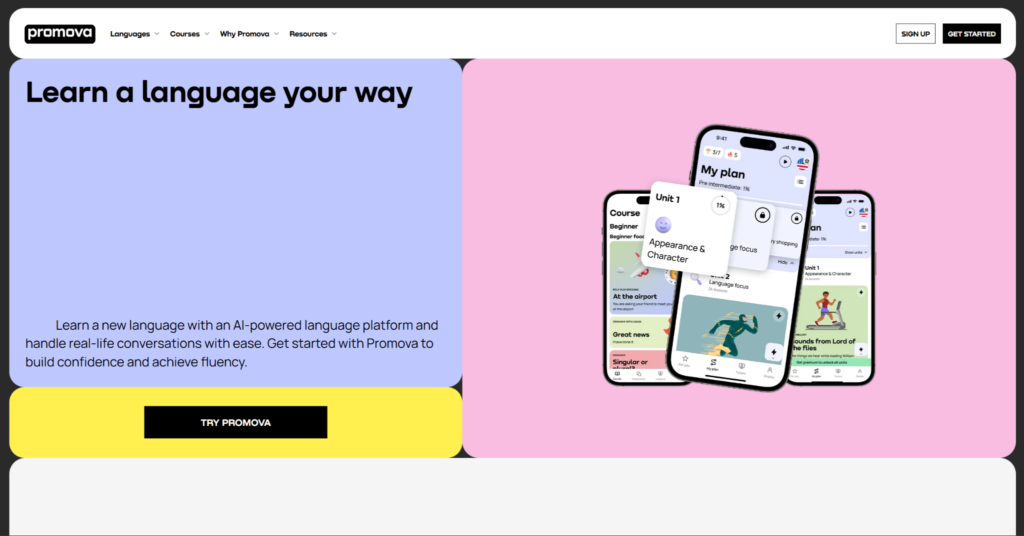
Promova is not a vocabulary app. Not really. Words and phrases sit next to speaking practice, an AI Tutor, AI conversations, and role-play. You move from “I know that word” to “I can say that word in a sentence.” That shift? Bigger than most people realize. The app does not let you hide behind multiple-choice questions.
Teacher-made content keeps things planned, not random. Dyslexia Mode 2.0, White Noise Mode for ADHD, and ASL support? Not afterthoughts. When the setup feels easier to use, you repeat words more often. That is just how people work. Promova fits people who want practical language they can actually say. Not words they can only point to on a screen.
Here is what matters. Useful vocabulary needs context, repetition, and speaking out loud. Promova puts lessons, AI speaking practice, and role-play in the same flow. You study a phrase. You practice with the AI. You use it in a fake-but-real-enough situation. That is how words leave passive memory. That is how they become active. Here is what the app actually does:
- Guided lessons: Help learners study useful words and phrases in a clearer order;
- AI Tutor support: Gives users a place to practice phrases before real conversations;
- AI speaking practice: Helps learners repeat, answer, and use new language out loud;
- Role-play-style tasks: Connect phrases to everyday situations instead of isolated memorization;
- Accessibility tools: Dyslexia Mode 2.0, White Noise Mode, and ASL support different learning needs.
Promova takes first place because it connects vocabulary, phrase learning, speaking practice, and accessibility in one spot. Strongest for learners who want words to become usable language. Not saved items in an app that never get used.
Where it shines. Promova works when you want structure but still need active practice. AI support lets you try phrases without pressure. That makes it a strong Top 1 for everyday vocabulary that should actually be spoken. Not just studied.
2. Drops
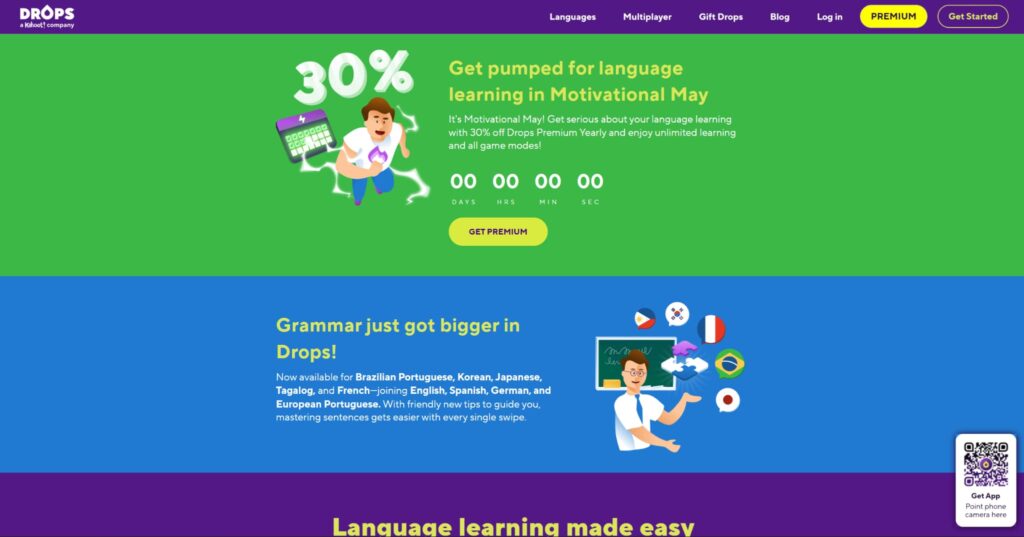
Drops works well for learners who remember words better through pictures rather than plain lists. Its format is fast vocabulary exposure, not long lessons or tutor support. You swipe, match, and repeat. No grammar explanations. No speaking practice. Just words and images. Drops is useful for building word recognition, especially when you want light daily practice without pressure.
The difference from Promova is clear. Drops focuses on visual memory and short vocabulary sessions. Promova connects words with speaking practice, AI support, and guided lessons. Drops helps you collect and review words quickly. Promova helps you turn those words into spoken phrases. Drops fits best as a vocabulary booster, not a full learning route. Use it to build a word bank. Then take those words somewhere else to speak them.
Visual vocabulary tools help when plain word lists feel boring or hard to remember. Drops gives you a quick way to connect words with images and repeat them in small bursts. Five minutes here, five minutes there. Low friction, low commitment. Here is what you get:
- Visual word practice: Helps learners connect vocabulary with images instead of plain lists;
- Short sessions: Fits quick study moments without a heavy lesson setup;
- Mnemonic images: Makes new words easier to remember through visual cues;
- Wide language range: Gives learners access to many vocabulary sets across different languages.
Drops works best when the goal is quick word exposure and visual memory. It is useful as a vocabulary tool, but you may need another app for deeper speaking practice.
Where it shines. Drops is strong for learners who want vocabulary without pressure. The short format helps with consistency. Best when you need words first and conversation practice later.
3. Mango Languages
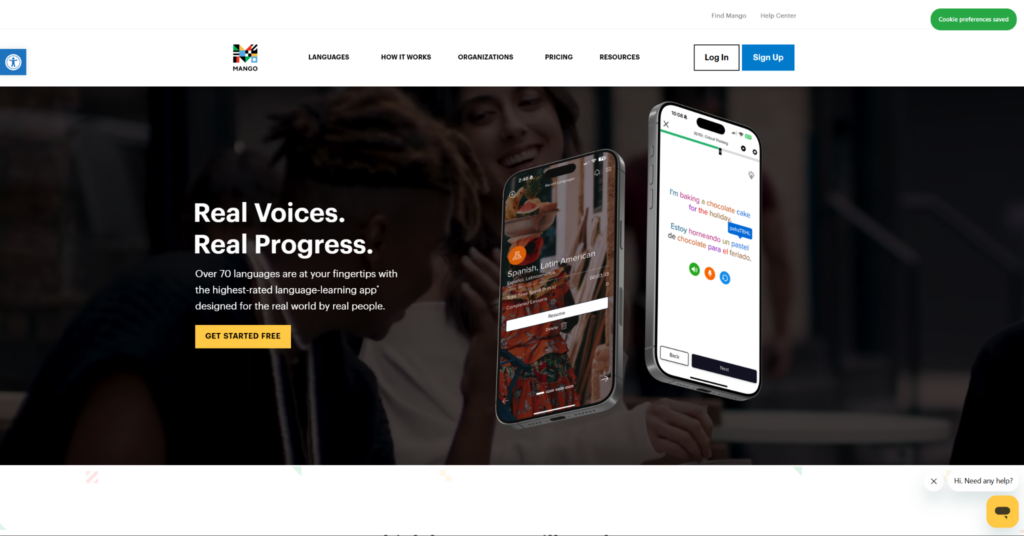
This app is for learners who do not want to memorize isolated words only. You get vocabulary, grammar, pronunciation, culture, and comprehension in one flow. Mango fits people who want phrases that sound connected to real conversations. Not just “hello” and “thank you.” Whole sentences that make sense in context. The app explains why people say things a certain way, not just what the words mean.
So, how is Mango different from Drops or Memrise? Drops is stronger for visual vocabulary. Mango gives more phrase context and cultural notes. Compared with Promova, Mango works well for phrase learning, but Promova is broader because it adds AI speaking practice, role-play-style tasks, and accessibility tools. Mango is a good option when you care about how phrases are used, not only what they mean. Practical phrase learning with cultural framing.
Phrases often fail when learners only know direct translations. Context matters. People use different wording depending on tone, situation, and culture. Mango helps you see useful language inside conversational patterns, not as isolated items. Here is what the app offers:
- Conversational phrases: Helps learners study language in useful sentence patterns;
- Cultural notes: Shows how phrases can change by situation and social context;
- Pronunciation support: Gives users practice with how phrases should sound;
- Retention tools: Helps learners review and remember practical language over time.
Mango Languages is useful for learners who want vocabulary with more context. Works well when phrases matter more than isolated word lists.
Where it shines. Mango is strongest when you want to understand how people actually use phrases. Cultural notes make common expressions feel less random. Good fit for learners who care about meaning, tone, and use.
4. Memrise
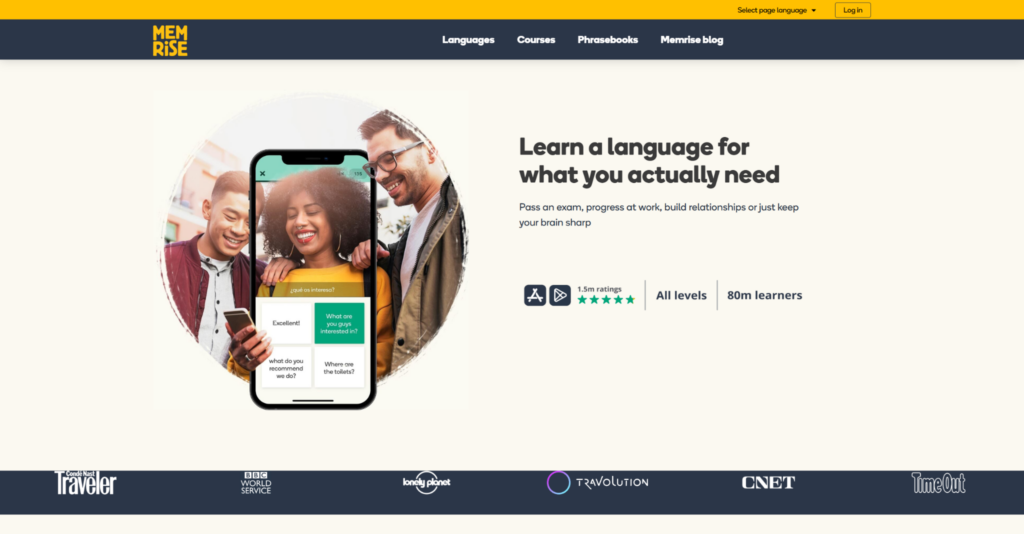
People call it a flashcard app. That is not quite right. Memrise gives you words and phrases that feel like something you would actually say. How to ask for directions. Order food without pointing at the menu. Make awkward small talk at work. The language sounds less like a textbook and more like a person. That is the whole point. Vocabulary that does not make you sound stiff or weird.
Where does Memrise fit here? Good question. It works for learners who want words and phrases that feel natural and are tied to real situations. Promova gives you more active speaking support, guided lessons, and accessibility tools. Memrise stays in its lane: vocabulary and phrase exposure. You want useful language without a heavy class structure? Memrise does that. A solid option for building everyday vocabulary that you might actually use.
Here is the thing about memory. You remember words better when they connect to something you actually want to do. Memrise ties phrases to daily life, travel, work, and relationships. The goal is to make language feel less abstract and more like a tool you need right now, not someday. Here is the breakdown:
- Useful vocabulary: Helps learners focus on words they may actually need;
- Everyday phrases: Connects language to travel, work, relationships, and daily situations;
- Natural-sounding speech: Gives learners exposure to language that feels less textbook-like;
- Light study format: Works for users who want practical practice without a heavy course setup.
So yeah. Memrise is a good pick when you want useful vocabulary tied to life situations. Strongest when the goal is practical phrase exposure, not a full guided course.
Where it shines. Memrise works well when you need language for a clear reason. Travel. Work. Social stuff. It makes vocabulary feel less like homework and more like something you would actually use.
Which App Fits Your Vocabulary Goal Best
So which one do you pick? Depends on your actual problem. Promova is strongest when you want words and phrases connected to guided lessons and speaking practice. Drops? That is for visual memory and quick word hits. Mango Languages fits learners who want phrases with cultural context and real conversation flavor. Memrise is useful when vocabulary needs to connect to something you are actually going to do. Travel. Work. Relationships.
Pick based on what you need most: active use, visual memory, phrase context, or practical vocabulary for daily situations.
Final Thoughts
Here is the thing. Useful words and phrases only matter if you can remember them and actually use them. Promova takes first place because it connects guided lessons, AI Tutor support, AI speaking practice, role-play tasks, teacher-made content, and accessibility tools. That makes it stronger for learners who want vocabulary to move into active speech. Not just saved somewhere. Actually spoken.
Drops handles the visual vocabulary. Mango Languages adds phrase context and culture. Memrise ties words to real-life goals like travel and work. Each app serves a different kind of vocabulary learner. The best app is the one that helps words leave the screen. Become something you can actually say, understand, or use. Everything else is just noise.