
At the beginning, most field teams do not need a system.
A few reps, a handful of accounts, a simple route. Orders are tracked in a spreadsheet, deliveries are managed informally, and store visits are remembered rather than recorded.
It works because the scale is small.
The same setup becomes harder to manage as the team grows. Not all at once, but gradually. A few more reps, more stores, more deliveries per day. What used to be manageable starts to require more coordination.
That is usually when tools are introduced. First one, then another.
What Changes When the Team Gets Bigger
Growth does not just add volume. It changes how work is handled.
A rep can no longer rely on memory alone. A driver cannot adjust every delivery without updating the system. Managers need visibility that did not matter before.
At this stage, the process becomes more structured.
Visits need to be logged. Orders need to be tracked. Deliveries need to be recorded. Each part starts to take shape as its own workflow.
That is where separate tools begin to appear.
They solve specific problems, but they also introduce new ones.
When Separate Tools Stop Being Enough
For a while, using different systems works.
One tool handles sales. Another tracks deliveries. A third is used for store visits. Each does its job well enough.
The difficulty shows up in how they fit together.
A rep places an order, but the delivery system does not reflect the latest changes. A driver completes a route, but the visit data is stored somewhere else. A manager tries to understand what happened across both and ends up piecing it together manually.
Nothing is technically broken.
It just takes more effort to keep everything aligned.
That is when teams start looking for a way to bring these parts closer together.
1. SimplyDepo
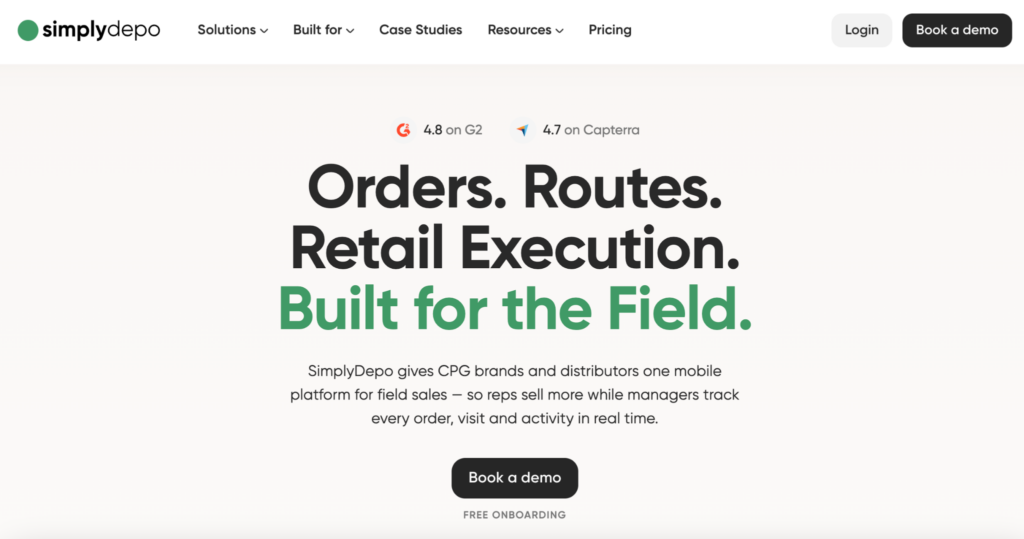
SimplyDepo is built for teams that have outgrown simple setups but do not want to manage multiple systems.
It combines store visits, order capture, and delivery workflows in one place, which makes it easier to keep track of what is happening across the entire process.
The platform includes:
- Store visits with audits and photo reporting
- Order capture linked to each account
- Route planning and delivery tracking
- Van sales and invoicing
- Offline operation with automatic sync
What becomes noticeable as the team grows is how much less coordination is needed.
Instead of checking multiple systems, most of the information is already connected. This tends to reduce the number of small adjustments that usually happen when processes are split.
It works best for teams where sales, visits, and deliveries are closely connected.
2. Pepperi
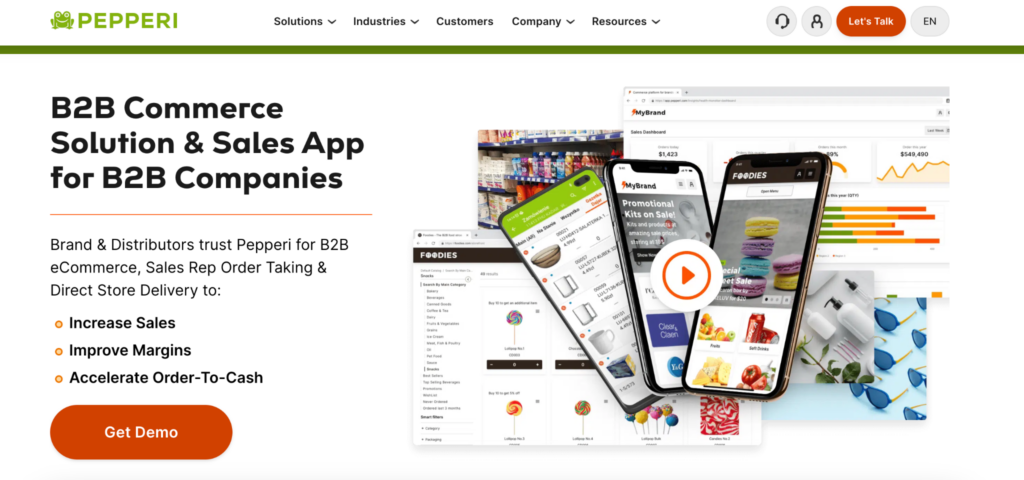
Pepperi is often used when operations become more structured.
It brings together sales, ordering, and distribution into a single environment, which allows teams to manage more complex workflows as they scale.
The platform includes:
- Field sales and order management
- Product catalogs and pricing control
- Delivery and route workflows
- Integration with internal systems
This creates a consistent structure across the business.
For smaller teams, the system can feel more involved than necessary. As operations become more defined, that structure starts to make more sense.
3. Repsly
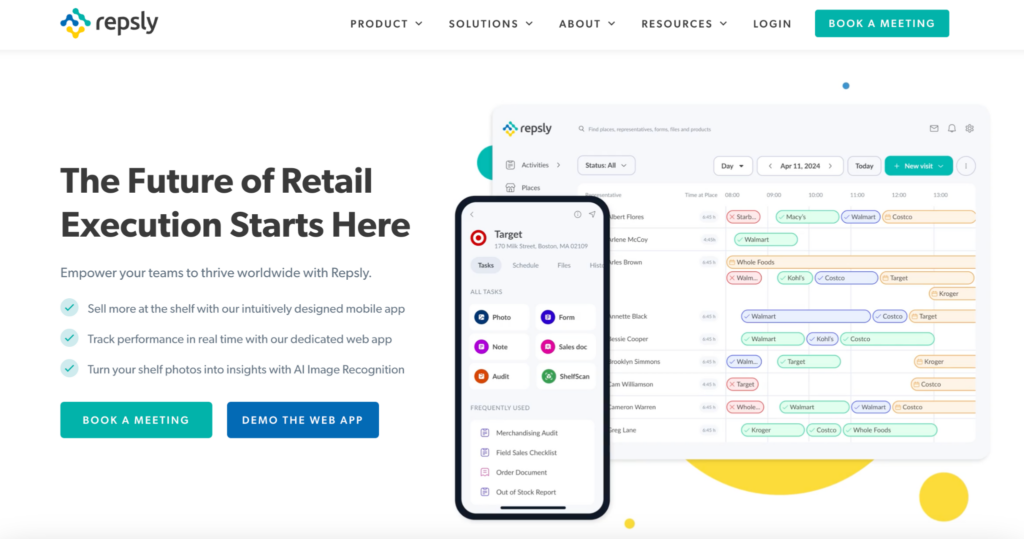
Repsly focuses on bringing structure to store visits.
As teams grow, consistency becomes more important. Reps need to follow similar processes, and managers need to see what is happening across locations.
The platform includes:
- Store audits and task management
- Photo reporting
- Activity tracking
- Performance monitoring
This makes it easier to standardize execution.
At the same time, sales and delivery workflows are handled separately, which means the system covers one part of the process rather than all of it.
4. Orders in Seconds (OIS)
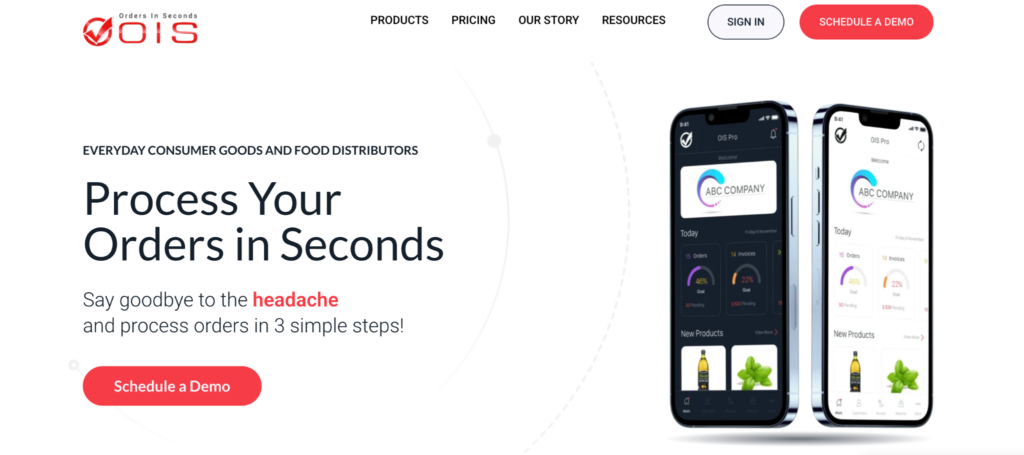
Orders in Seconds is often introduced when order volume increases.
It focuses on making order entry and delivery tracking more consistent, especially as the number of transactions grows.
The platform includes:
- Mobile order entry
- Customer account management
- Delivery tracking
- Integration with accounting systems
This helps bring structure to sales and fulfillment.
Store visits and merchandising are not part of the core system, which means teams still rely on separate tools for those tasks.
5. Skynamo
Skynamo supports teams as they move from informal sales processes to something more organized.
It helps reps manage accounts, track interactions, and capture orders without relying on manual tracking.
Its functionality includes:
- Mobile order capture
- Customer and account management
- Offline access to data
- Route planning
This makes it easier to handle a growing number of accounts.
Delivery workflows are less developed, so it often works alongside other systems.
6. Spotio
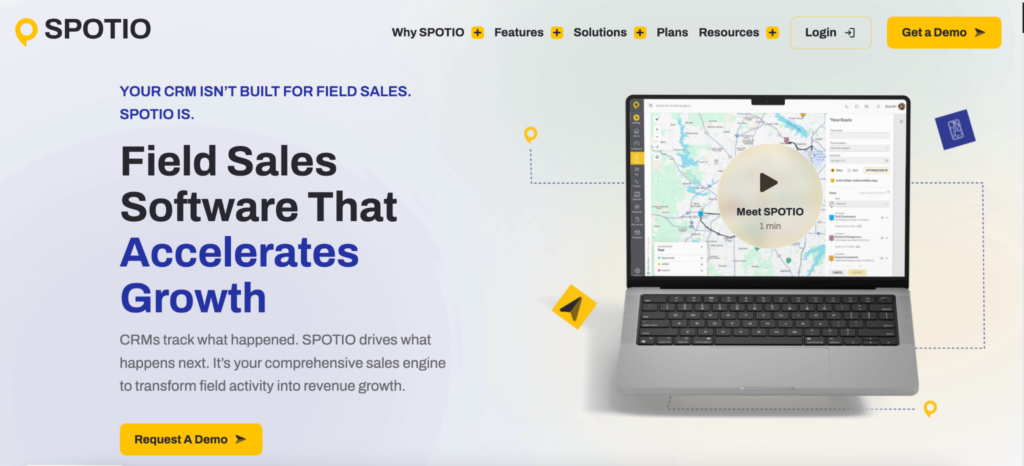
Spotio is used when teams need better visibility into activity.
As the number of reps increases, it becomes harder to understand who is doing what and where.
The platform includes:
- Territory management
- Visit tracking
- Activity reporting
- Performance insights
This helps managers see how work is distributed.
It does not handle orders or deliveries directly, which means it supports part of the process rather than replacing it.
7. Leadbeam
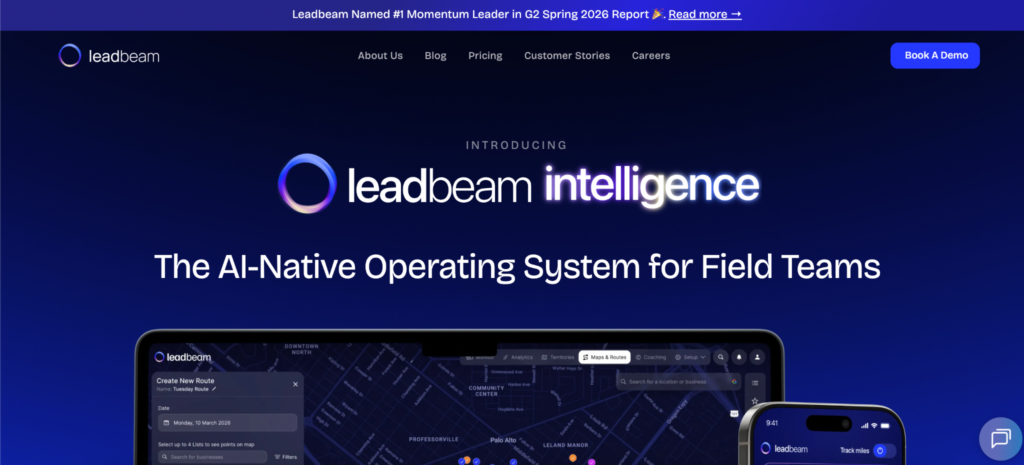
Leadbeam focuses on organizing information as teams grow.
More accounts mean more data, and that data needs to be structured in a way that is easy to use.
Its functionality includes:
- Lead and account management
- Sales activity tracking
- Territory insights
- Data capture tools
This supports better decision-making.
It does not manage delivery or store visit workflows, which means it is usually combined with other tools.
8. Zoey
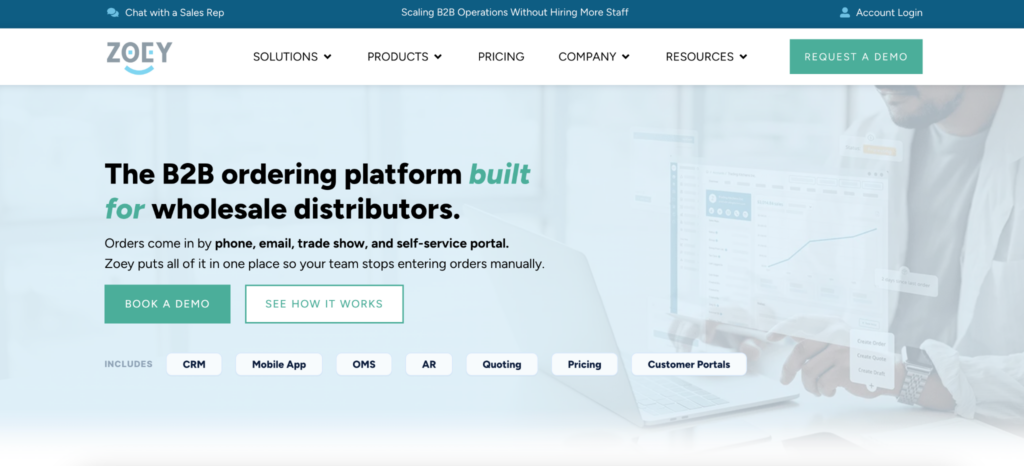
Zoey takes a different approach by moving part of the process online.
As teams grow, handling every order manually becomes harder. Allowing customers to place orders themselves reduces some of that pressure.
The platform includes:
- B2B ordering portals
- Customer self-service functionality
- Product catalogs and pricing
- Integration with backend systems
This shifts some of the workload away from the field team.
It does not cover store visits or delivery workflows, which means it becomes one part of a larger system.
What Scaling Feels Like in Practice
Growth is not just about more work. It changes how that work is handled.
A process that felt simple at a smaller scale starts to require more structure. Tasks that were informal need to be recorded. Information that was remembered needs to be tracked.
This is where the difference between systems becomes noticeable.
Some setups continue to rely on multiple tools. Others bring more of the process into one place.
Neither approach is wrong. They just require different levels of coordination.
Choosing a Setup That Matches the Stage of the Team
There is no single system that fits every stage.
Early on, simplicity matters more than structure. As the team grows, visibility becomes more important. At a certain point, coordination between systems becomes the main challenge.
The tools in this list reflect different stages of that progression.
Some help organize a single part of the workflow. Others bring multiple parts together.
The choice usually depends on where the team is right now and how much complexity it is ready to manage in one place.
That is what determines whether the system feels helpful or unnecessary.