

Privileged accounts continue to be a primary attack vector. Legacy PAM solutions built around static credential vaulting are no longer enough to handle threats such as session hijacking.
Modern platforms now integrate just-in-time access, behavioral analytics, and identity threat detection for stronger protection.
We rank six leading PAM solutions for 2026 according to deployment speed, agentless capabilities, threat detection depth, and pricing transparency.
How Modern PAM Platforms Reduce Privileged Access Risks
Privileged access management now plays a central role in both identity control and active threat prevention. Organizations must carefully manage access to sensitive infrastructure like servers, databases, and OT systems, all while maintaining proper audit records for major regulations.
Older PAM tools mainly stored credentials and rotated passwords on a schedule. That worked okay for its time, but it struggles with real-world threats — especially session takeovers or temporary contractor access.
That’s why today’s solutions have evolved. They combine session monitoring, behavioral analysis, and just-in-time access. Many also include native ITDR capabilities that spot unusual behavior while sessions are still active.
When choosing a platform, most teams look at four key things: how fast it can be deployed, whether it needs agents everywhere, how well it fits into their current identity setup, and its ability to catch threats after authentication.
Top PAM Platforms in 2026
Privileged credentials are ransomware’s primary target. Legacy PAM tools require months of services and disrupt workflows. We evaluated platforms on deployment speed, ITDR integration, pricing clarity, and hybrid fit.
Syteca
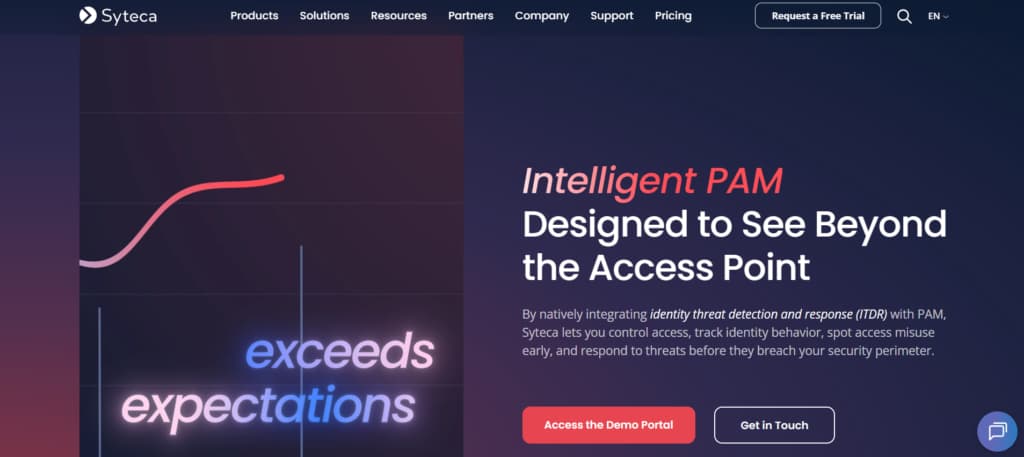
Syteca is the only PAM platform with native ITDR that deploys in hours and scales without re-architecture. The platform delivers a modern privileged access management platform with built-in identity threat detection and response capabilities, distinguishing itself through deployment speed and architectural flexibility.
The platform uniquely combines PAM with native ITDR in a single system, enabling organizations to detect and respond to access misuse without delay while maintaining privacy-by-design principles. Founded in 2013, the company now supports more than 1,500 customers with offices in 4 countries and a partner network of 300+ companies across 56 countries.
The platform’s standout technical advantage: ITDR is built into the core, based on session intelligence, not added later. This architectural choice means threat detection algorithms analyze session metadata in real time rather than ingesting logs from external systems. Automated incident response capabilities include session blocking and user lockout, executed without human intervention when rule thresholds are triggered.
Core capabilities:
| Feature category | Implementation |
| Privileged Access Management | Credential vaulting, JIT access, MFA, workflow approvals |
| Identity Threat Detection | Real-time alerts, automated response, session validation |
| User Activity Monitoring | Session recording, keystroke logging, USB device control |
Among its customers are big names like Visa, Samsung, UPS, Panasonic, Accenture, the US Department of Defense, Turkish Airlines, Payoneer, and the Central Bank of Montenegro.
It has also received good industry recognition, such as inclusion in the 2024 KuppingerCole Leadership Compass for PAM and the Gartner 2025 Market Guide for Insider Risk Management.
You’ll need to request a quote for pricing, but the company emphasizes strong value and lower overall costs. This solution works particularly well for mid-sized and larger enterprises that need quick deployment and a nicely integrated PAM + ITDR platform in one place.
Fudo Security
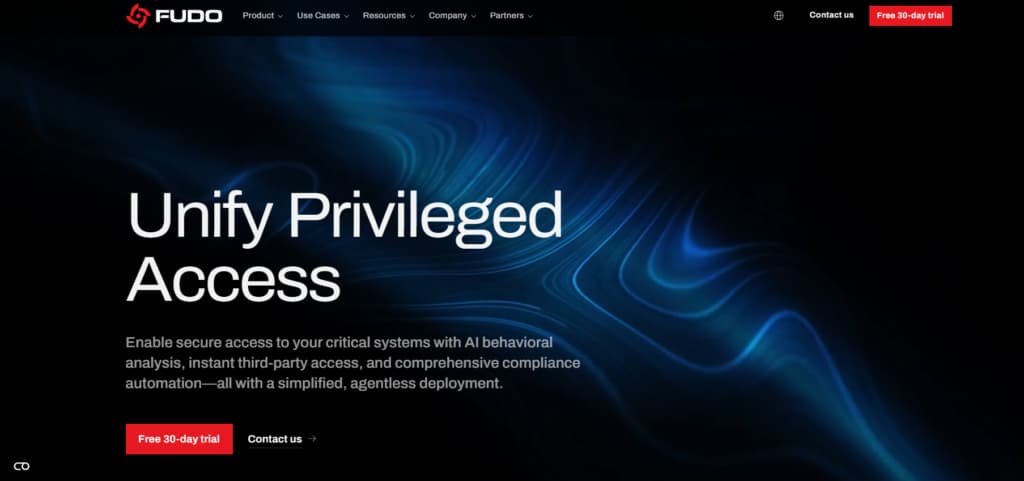
Fudo Security is a global leader in PAM and Zero Trust Remote Access solutions, transforming how organizations secure critical infrastructure with agentless deployment, AI-powered behavioral analytics, and just-in-time access workflows.
The technical differentiation centers on behavioral pattern recognition: Fudo’s AI analyzes 1,400+ behavioral features during privileged sessions, detecting anomalies that static rule engines miss. Founded in 2012, the platform emphasizes deployment simplicity through transparent proxy architecture.
Fudo’s agentless deployment works with existing IT infrastructure without requiring system modifications or endpoint software installation. Users connect through native RDP or SSH clients; all sessions flow through Fudo’s security layer, where AI models compare current behavior against learned baselines. This approach eliminates the operational burden of agent version management across thousands of endpoints.
Deployment advantages vs. traditional PAM:
- No infrastructure changes — proxy sits inline without modifying target systems
- Zero endpoint software — users employ standard clients (mstsc.exe, PuTTY)
- Instant third-party access — Fudo ShareAccess enables secure access for vendors and contractors without VPNs, agents, or complex configurations
- Automated compliance — Complete audit trails with automated policy enforcement
Core feature set includes AI-powered behavioral analytics, session recording and monitoring, just-in-time access, credential management, real-time threat detection, and compliance automation.
The platform’s AI models learn individual session patterns rather than applying org-wide static rules, reducing false positives when power users exhibit legitimately unusual behavior.
ARCON
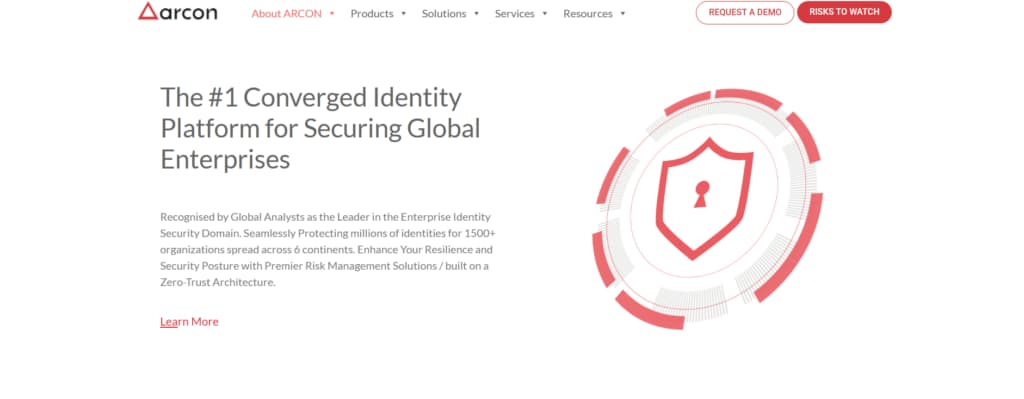
ARCON is a globally recognized Identity-As-A-Service provider that enforces Just-in-Time access and offers a robust session management engine to safeguard business and infrastructure assets across hybrid deployments.
The company was included in the 2022 Gartner Critical Capabilities assessment for converged identity platforms, with recognition across five use cases covering enterprise PAM, cloud entitlement management, endpoint privilege management, and more. This range of recognition indicates depth across the full identity stack.
Founded in 2006, ARCON positions PAM as one component of a unified identity fabric. The platform combines Privileged Access Management, Identity and Access Management, Endpoint Privilege Management, and Cloud Governance (CIEM) under a single management plane. This architectural choice benefits enterprises consolidating tools but may introduce complexity for teams seeking standalone PAM.
Pros:
- Gartner’s top ranking across multiple use cases validates technical breadth
- Just-in-Time access control and granular session management enforce Zero Trust at the privilege layer
- Hybrid environment support addresses on-prem + multi-cloud simultaneously
Leadership includes Anil Bhandari (Chief Mentor, Founder), Eleanor Meritt (President, Product & Strategy), and Sanjay Khanna (Chief Operating Officer). The converged architecture makes sense for enterprises standardizing on a single identity vendor, but may over-provision for mid-market buyers focused narrowly on privileged account security.
ManageEngine
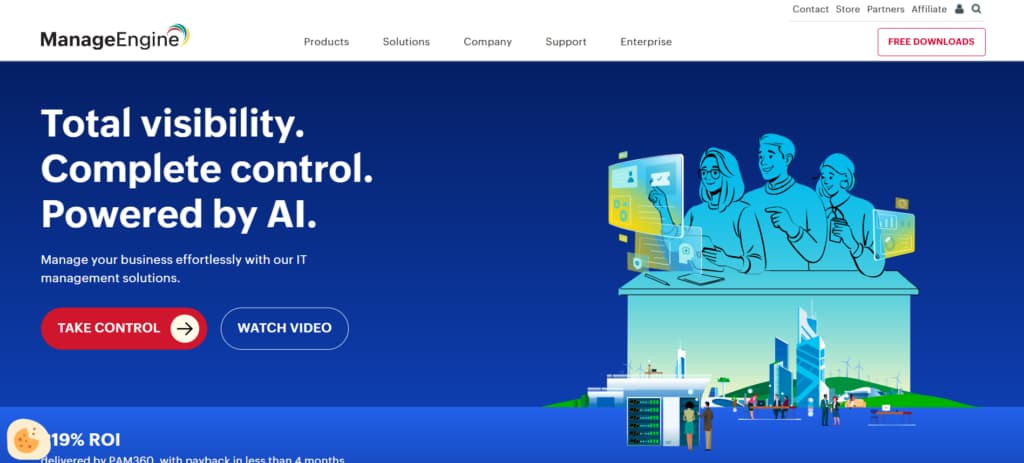
ManageEngine is an IT management and cybersecurity company that provides enterprise software for identity and access management, privileged access management, endpoint security, IT operations, SIEM, and cloud infrastructure management. As a division of Zoho Corporation, the platform benefits from 20+ years of enterprise software development maturity.
The company supports organizations across government, healthcare, finance, manufacturing, education, and retail, with 180,000 organizations deployed across 190 countries.
The strategic difference: ManageEngine positions PAM as one module within a broader unified endpoint management and IT operations platform. Core capabilities span identity and access management, Active Directory & M365 management, MFA & SSO, Zero Trust, privileged access management, and low-code app development.
This integration benefits enterprises already standardized on ManageEngine for service desk, patch management, or network monitoring — PAM inherits existing identity data and workflow automation.
| Strength | Implementation |
| PAM360 platform | Credential vaulting, privileged session management, access governance |
| Cloud-ready infrastructure | Hybrid and multi-cloud environment support |
| Compliance-focused tools | Audit trails for regulatory requirements |
| MSP platform | Centralized control for managed service providers |
The company highlights AI-powered IT management capabilities built from the ground up, trusted by 180,000 organizations to take complete control of their IT. This AI layer analyzes operational patterns across endpoints, applications, and identity systems to surface privilege escalation risks before they trigger alerts.
Founded in 2002, ManageEngine’s longevity signals product maturity and enterprise support infrastructure. The trade-off: teams seeking best-of-breed standalone PAM may find the unified suite over-provisioned for narrow use cases.
One Identity
One Identity delivers trusted identity security for enterprises worldwide to protect and simplify access to digital identities, unifying identity governance and administration, privileged access management, and access management for security without compromise.
The architectural thesis: The One Identity Fabric unifies previously siloed identity tools into a single identity and access management framework with AI-driven security built in to deliver predictive insights right out of the box.
This convergence strategy targets enterprises tired of integrating separate IGA, PAM, and SSO vendors. Core capabilities include Identity Governance, Privileged Access Management, Active Directory Management, Entra ID Management, Behavior Driven Governance, Advanced Authentication, and Log Management.
The platform’s AI layer analyzes identity data across all three domains simultaneously, correlating IGA access reviews with PAM session anomalies and SSO authentication patterns.
Unified fabric advantages:
- Single policy engine governs access requests, privilege elevation, and authentication across all systems
- Behavior Driven Governance applies machine learning to access certification workflows, reducing manual review burden
- Pre-integrated connectors eliminate custom scripting between IGA and PAM modules
Praerit Garg serves as Chief Executive Officer, leading the unified platform strategy. The company’s identity security solution protects people, applications, and data through converged controls rather than point-product integration.
CyberArk Software
CyberArk’s identity security platform is the first line of defense against malicious actors and unauthorized access, securing every identity — human, machine, and AI — with the right level of privilege controls.
Integration breadth defines CyberArk’s market position: With more than 200 alliance partners and 300 out-of-the-box integrations, CyberArk’s partner network unlocks identity security across your enterprise.
The platform delivers Secure Single Sign-On, Adaptive Multi-Factor Authentication, Workforce Password Manager, Identity Automation and Workflows, User Lifecycle Management, Continuous Authentication and Protection, Web Session Monitoring and Control, and Access Reviews and Certifications.
This breadth positions CyberArk as a full workforce identity security suite rather than a PAM-only point product. Founded in 2019, the current entity emerged from Palo Alto Networks’ acquisition strategy.
| Identity threat | CyberArk control |
| Credential-based attacks | Passwordless methods (passkeys, FIDO2, device-bound credentials) eliminate static passwords that attackers phish or reuse |
| Ransomware lateral movement | Least privilege limits user rights to only what’s needed, reducing lateral movement and limiting damage from compromised accounts |
| Post-auth session hijacking | Real-time session controls and visibility detect and stop risky activity during a session, not just at sign-in |
Executive leadership includes Nikesh Arora (Chairman and CEO), BJ Jenkins (President), and Karim Temsamani (President, Next Generation Security). The alliance partner ecosystem — spanning cloud providers, SIEM vendors, and endpoint security firms — enables pre-validated integration patterns that reduce deployment risk.
How to Choose a PAM Platform
Here are the most important factors to consider:
- Deployment architecture — Prefer agentless models for faster integration; ensure cloud-native platforms also support your legacy systems.
- Threat detection depth — Choose native session-layer ITDR over bolted-on solutions that add latency.
- Just-in-time access — Temporary privilege elevation with automatic expiration is critical for Zero Trust.
- Integration breadth — Strong support for AD, SIEM, ticketing, and cloud IAM with 50+ pre-built connectors.
- Professional services dependency — Favor platforms with quick, self-service deployment over long vendor-led implementations.
- Pricing transparency — Published tiers are preferable to opaque “contact sales” models.
These points will help you select a PAM solution that fits both your technical and operational needs.
Conclusion
These six platforms each take a genuinely different approach to solving privileged access challenges in 2026.
Syteca stands out for teams that need fast deployment and strong native ITDR. Fudo appeals to organizations that want agentless architecture and smart AI behavioral analytics. ARCON works well for enterprises looking to consolidate multiple identity tools.
ManageEngine is a natural fit for companies already using their broader IT suite. One Identity helps organizations unify IGA, PAM, and SSO under one fabric. CyberArk performs well in complex multi-cloud deployments due to its large number of pre-built integrations.
Before making a final decision, request demos and session recording trials from your top two choices. The architecture differences become clear once you see them working in your own environment.